
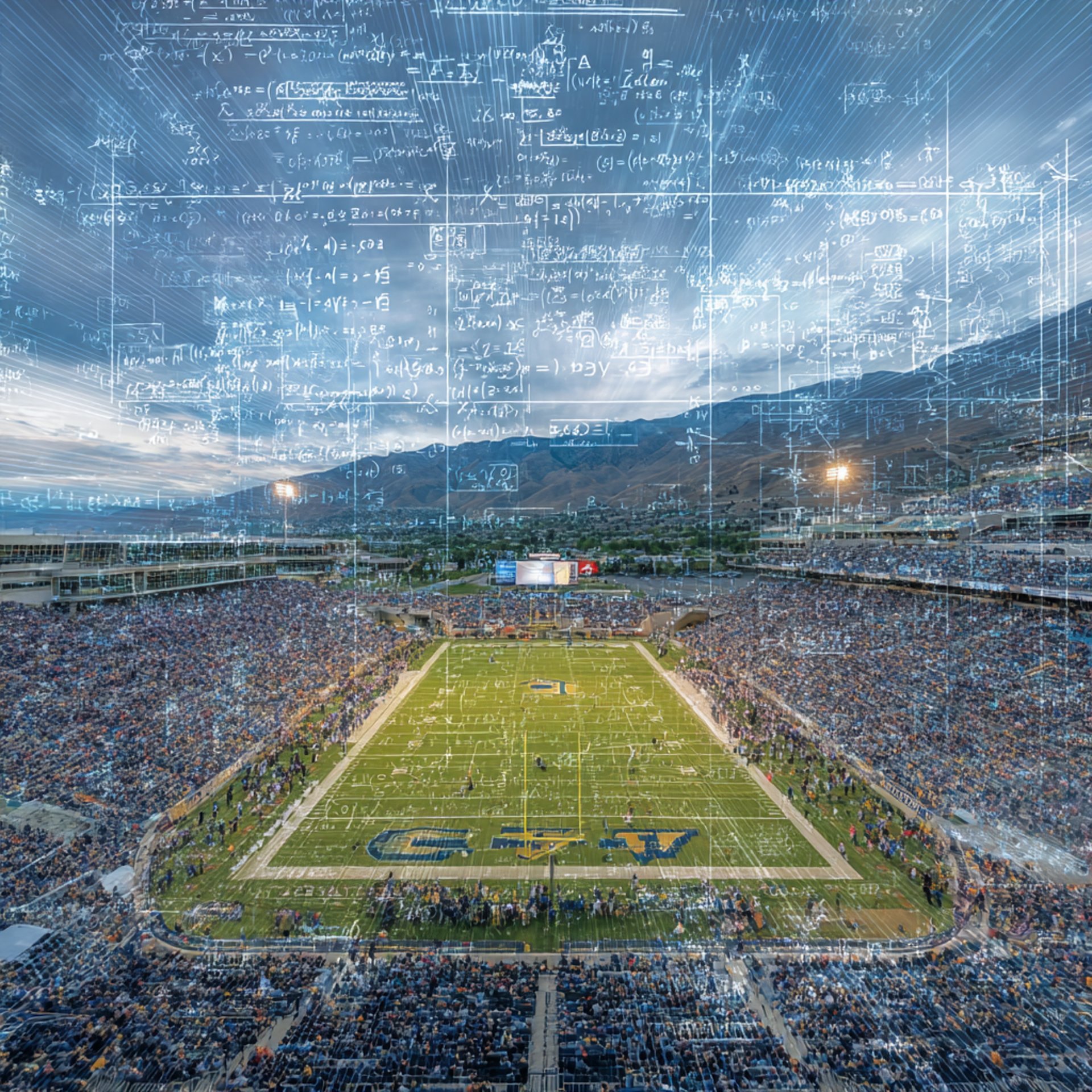
The Economics of College Athletics Have Already Changed. Most Universities Haven't.
The Capital Era Has Begun in Collegiate Athletics
What the Utah–Otro structure changes—and what most programs are not yet structured to evaluate
Executive Brief (Public Release)
April 2026
Introduction
The recently announced partnership between the University of Utah and Otro Capital is not an isolated transaction.
It is the first operational example of a broader structural shift now entering Division I athletics:
the separation of athletic commerce from traditional university operating models under conditions of capital participation.
While elements of this shift have been discussed for several years—particularly following the House v. NCAA settlement—Utah’s structure represents the first instance in which these dynamics have been formalized into a functioning commercial entity with defined capital, governance, and exit parameters.
Most institutions are not yet structured to evaluate this shift—financially, operationally, or strategically.
What the Utah Structure Represents
Public reporting indicates the formation of a new commercial entity responsible for managing revenue-generating functions historically housed within the athletic department.
At a structural level, the model introduces:
external capital deployment tied to return expectations
shared operational influence between institutional and commercial leadership
defined participation in future revenue streams
mechanisms for aligning donor capital with economic ownership
a finite capital horizon with anticipated liquidity event
This model does not eliminate university control.
It redefines how control is exercised across academic, athletic, and commercial domains.
Why This Changes the Landscape
1. Capital Becomes a Competitive Variable
College athletics has historically been constrained by:
donor cycles
media distributions
institutional budget structures
External capital introduces a new dynamic:
speed and scale of resource deployment.
Programs capable of structuring and absorbing capital effectively may accelerate investment across compensation, infrastructure, and commercial operations.
Others may face increasing separation over relatively short timeframes.
2. A Structural Tier Is Likely to Emerge
If replicated, this model may contribute to the formation of a de facto top tier of programs operating with:
integrated commercial entities
capital-backed growth strategies
professionalized revenue systems
Participation in this tier will depend less on brand alone, and more on how effectively institutions can operate within these new structures.
3. Revenue Architecture Becomes the Constraint
Across Division I, the emerging gap is not between programs with and without demand.
It is between programs that can:
structure, align, and scale revenue across systems
and those that cannot.
Utah’s structure does not create demand.
It assumes demand—and reorganizes how that demand is monetized.
Governance and Institutional Considerations
The introduction of capital participation introduces a set of structural decisions that most athletic departments have not previously encountered in this form.
These include:
allocation of decision rights across institutional and commercial leadership
alignment between academic governance and commercial incentives
integration of NIL activity within broader revenue systems
management of donor participation under evolving economic structures
definition of acceptable outcomes within finite investment horizons
These considerations are embedded within the structure itself.
What Is Not Immediately Visible
The external structure of these transactions is observable.
The internal mechanics are not.
Across similar capital-backed environments, underlying agreements typically address:
revenue participation sequencing across categories
priority and protection mechanisms for invested capital
constraints on institutional flexibility under defined scenarios
alignment between short-term performance and long-term enterprise value
conditions governing exit, control, and continuation
These elements influence how a structure performs over time.
They are not visible in high-level summaries.
And in many cases, they are not fully evaluated at the point of commitment.
Implications for the Next 24–48 Months
Institutions should expect signal development across several areas:
whether capital-aligned programs materially outperform peers
how conferences respond to structural asymmetry
how media and fan monetization models evolve
how NIL ecosystems integrate with institutional systems
how governance bodies respond to hybrid structures
Early outcomes will influence adoption and pace.
A Practical Observation
Utah’s structure is not difficult to replicate mechanically.
It is more difficult to assess how it will behave once implemented.
Conclusion
The introduction of capital into collegiate athletics does not represent a future possibility.
It represents a present condition.
Institutions are not being asked whether they will participate.
They are being asked to evaluate:
whether they are structurally prepared
under what terms
and with what long-term implications
Many programs are approaching these questions with only partial visibility into how their current systems would perform under these conditions.
ARC9 Labs provides institutional intelligence to evaluate revenue structure, system interaction, and capital readiness before key institutional positions are set in agreements that are not fully understood at the point of commitment.
This brief reflects only the observable and inferable structure of the Utah–Otro Capital transaction. It does not reconstruct underlying agreement dynamics, model institution-specific positioning, or evaluate how comparable structures would perform under alternative conditions.
Those dimensions are not accessible through public information, benchmarking, or internal reporting.
They require the ability to interpret how capital, governance, and revenue systems interact under multiple potential scenarios—prior to execution.
ARC9 is built to clarify and position institutions within capital structures before commitments are made.
Next Step
A sample institutional analysis is available upon request.
ARC9 LABS
Sports Revenue Division
Strategic Intelligence Group
A Licensee of Forlytica Applied
CONTACT
conferenceS
engage@arc9labs.com
© 2026. All rights reserved.
ARC9 Labs operates as a licensee of Forlytica Applied, the commercial arm of the Forlytica Research Group, and is authorized to apply select analytical outputs and structural modeling frameworks developed through that work.
Forlytica Research Group maintains an independent body of research focused on institutional systems, economic architecture, and multi-variable modeling. ARC9 Labs applies selected outputs of this research within defined advisory contexts.
Forlytica applied & Forlytica research group
ARC9 Labs’ work is part of a broader applied intelligence framework used across institutional, commercial, and complex system environments.
ARC9 Labs provides analytical and advisory perspectives only and does not participate in institutional decision-making or execution.
ARC9 Labs’ analytical work also extends to conference-level economic structure and media-driven revenue systems.
For institutional inquiries or to request a briefing sample